A Love Letter to Muscle
Why muscle matters so much to me & why you should care, too + how to start strength training.
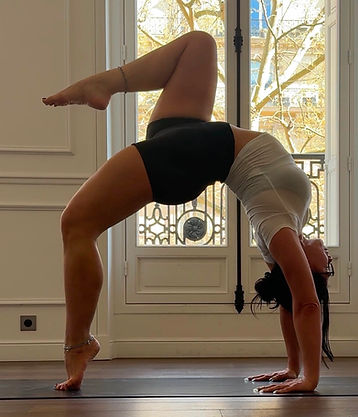
There is little that makes me happier than having a high muscle mass. I recently learned I’m about 74% muscle mass (58kg) and metabolically about 25. With almost all my workouts, I’m thinking about how I can build and maintain muscle. Over and over, it has been shown that muscle mass is the biggest predictor of health and longevity. Especially for women, muscle can help us have a better quality of life.
So why does muscle matter so much to me?
The higher your peak muscle mass in your 30’s, the longer it takes to decline in your 70s and 80s. Muscle is a major predictor of health & longevity with aging.
Muscle plays a major role in metabolism.
Metabolism not only helps with weight management, but poor metabolic health is associated with depression & Alzheimer’s.
Muscle is metabolically alive and burns calories while at rest.
Muscle is essential for everyday activities, from stairs to picking up groceries to being able to safely move around or get up from a seat without pain or instability.
Muscle prevents future injuries.
Muscle mass reduces the risk of diabetes.
Having muscle maturity helps me feel confident and capable.
Strength training improves my mood and increases my self-resilience.
Women lose muscle faster than men (especially after 35), yet women fear putting on size or ‘getting bulky,’ which will not happen.
It is a long-term investment plan for the brain (as increased muscle mass and strength reduces the risk of Alzheimer’s)
Muscle mass plays a significant role in fertility.
Muscle helps fertility by supporting metabolic health and insulin sensitivity. Building muscle does to require vigorous or intense exercising (which can hurt fertility.) Strength training can be low impact, challenging without being disruptive, and trauma informed overall.
Muscle can help to balance hormones.
Strength training helps promote bone density.
This is massive for women, as hormonal changes across our lifespans (think pregnancy and menopause) can weaken bones. Weak bones put us at risk for osteoporosis and subsequent fractures. Approximately one in two women over age 50 will break a bone because of osteoporosis. In a woman’s 60’s, hip fractures increase early death. It is imperative we build muscle in our 30’s and 40’s to protect us for the rest of our lives.
It shows little girls in my life their bodies can be strong and take up space. Hearing my niece talk about being strong, taking pride in her strength, and appreciating how strong I am makes my heart so happy.
Muscle is incredibly sexy. It gives the body the toned shape many women are striving for, adding curves and shape to the body.
Muscle helps me feel enormously capable, as I do not fear having to carry large bags or pick up things as needed.

How do you begin to strength train?
Only about 30% of adults strength train twice a week, while the majority do nothing. The biggest changes you can make are not from optimizing a program, but from simply finding a program that you can stick with and doing it consistently.
According to a recent analysis that reviewed over 137 studies and over 30,000 participants*, what was found to matter was training all muscle groups at least twice a week with 2-3 sets of each exercise, using a weight that feels challenging by the end of the set, and moving through a full range of motion.
It also found any form of resistance worked – from traditional weights like barbells or machines, but also bands and bodyweight. These all added to strength, mobility, power, and balance.
Despite many different ways to strength train, the body responds to many forms of resistance. Yet the biggest impact was found to be consistency over time.
Simply showing up again and again was what really mattered for long-term health benefits.
Pick something you enjoy and can stick with, and keep showing up.
I always said, the best practice is the one you actually do.

Of course, I believe, for women, progressive overload is incredibly important. This simply means gradually increasing the intensity of workouts or the challenge of workouts over time.
Women need to be lifting heavy weights! This is not a negotiable thing when it comes to building strength and bone density. Sure, body weight can be challenging and effective if you are starting from scratch, and it is important to work on moving weight safely, but with time, the resistance needs to increase. We lose 3-8% of muscle each decade after 30, but the work we do in our 30’s and 40’s can help protect us over our lifetimes.
The other aspect for muscle building is to appropriately fuel our bodies. This means not undereating. Women are chronic dieters due to societal norms, but to build muscle, we also have to feed the muscle. Good nutrition is a well-rounded diet of protein, vegetables, healthy fats, and minimally processed carbohydrates.
We definitely need carbohydrates to fuel muscle, so do not fear these as you work to build muscle. The main goal here is not to undereat. Even if you are trying to lose weight, without strength training, when you lose weight, a meaningful portion of the weight is likely lean mass.
I’d love to link Build&Bendy 1 and 2.0 here, as it is still a solid routine, but there are lots of options to create a training program available now.
Subscribe to stay informed of when I post my own routine (My Personal Wellness Pillars that help me look and feel my best), and feel free to let me know if you’d like more strength training direction or advice.
I love muscle, and I hope you do, too.
* ACSM Position Stand on Resistance Training, 2026


